
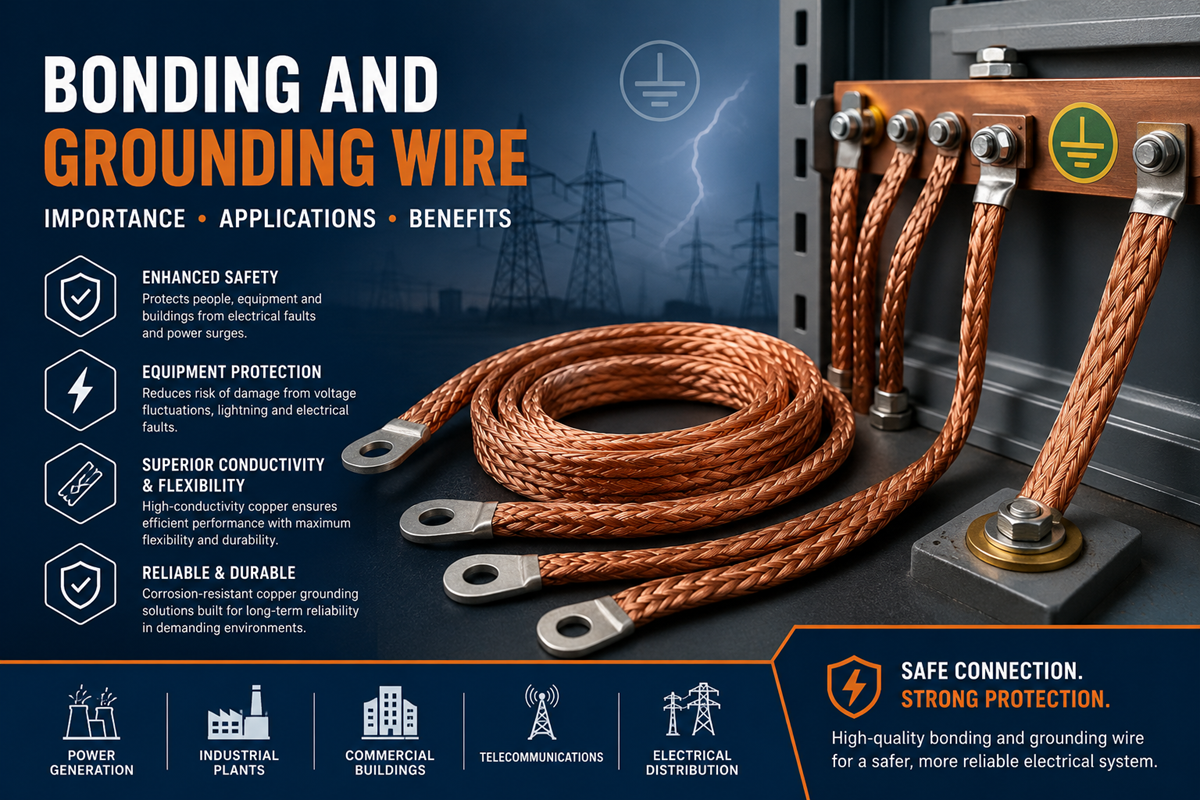
Bonding and Grounding Wire: Importance, Applications, and Benefits
A reliable electrical system depends heavily on effective grounding and bonding practices. Bonding and grounding wire plays a crucial role in protecting equipment, buildings, and personnel from electrical faults and power surges.
Grounding refers to creating a direct connection between electrical systems and the earth, while bonding connects metallic components to maintain the same electrical potential throughout the system. Together, these processes help prevent electrical hazards and improve overall system safety.
Bonding and grounding wire is typically manufactured using high-conductivity copper because of its excellent electrical performance and corrosion resistance. Copper-based grounding solutions are widely used in power generation facilities, industrial plants, commercial buildings, telecommunications systems, and electrical distribution networks. Flexible copper earth bonds and grounding wires are especially valued for their durability and ease of installation.
One of the primary benefits of bonding and grounding wire is enhanced safety. During electrical faults, grounding wires provide a low-resistance path for fault currents to safely dissipate into the earth. This minimizes the risk of electric shock, equipment damage, and fire hazards.
Another significant advantage is equipment protection. Sensitive electrical equipment can be damaged by voltage fluctuations, lightning strikes, or electrical faults. Proper grounding and bonding help stabilize electrical systems and reduce the likelihood of costly downtime.
Flexible copper earth bonds are often used where movement, vibration, or thermal expansion occurs. Their construction using multiple fine copper strands provides superior flexibility and resistance to fatigue, making them suitable for switchgear, control panels, transformers, gates, doors, and industrial machinery.
When selecting bonding and grounding wire, factors such as conductivity, flexibility, environmental conditions, and compliance with electrical standards should be considered. High-quality copper grounding products provide long-term reliability and efficient performance in demanding applications.
Industries across power generation, manufacturing, railways, telecommunications, and infrastructure development rely on dependable grounding systems to maintain operational safety and compliance with regulations. Choosing premium-quality bonding and grounding wire ensures consistent performance while minimizing maintenance requirements.
Conclusion
Bonding and grounding wire is an essential component of every safe electrical installation. By providing effective fault current dissipation and equipment protection, it enhances system reliability and safety. Investing in high-quality copper grounding solutions ensures long-lasting performance for industrial and commercial applications.
