
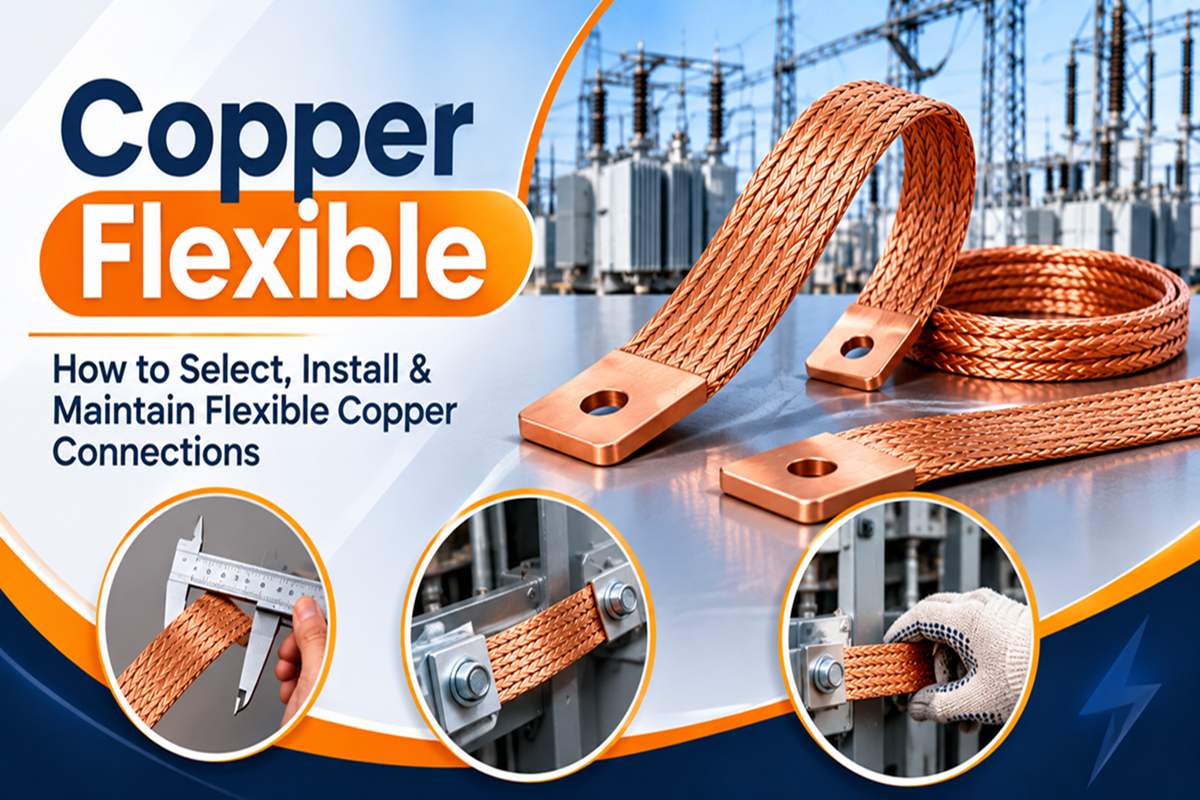
Copper Flexible: How to Select, Install and Maintain Flexible Copper Connections
Copper flexible connections are widely used in electrical systems where reliable current transmission and mechanical movement must be managed together. Selecting the right copper flexible component is important for maintaining electrical efficiency, reducing connection stress, and ensuring long-term equipment performance. Factors such as current requirements, conductor dimensions, installation conditions, and operating temperature should be considered before choosing a suitable solution.
Why Is Proper Selection of Copper Flexible Important?
Choosing the correct copper flexible connection helps ensure stable electrical performance and reduces the risk of connection-related problems. Electrical equipment often experiences vibration, temperature fluctuations, and mechanical movement. A properly selected flexible conductor helps accommodate these conditions while maintaining electrical continuity.
The selection process should consider the equipment design, electrical load, available installation space, and environmental conditions.
Important Factors to Consider When Selecting Copper Flexible
Before choosing a copper flexible conductor, consider the following factors:
1. Electrical Current Requirements
The conductor must have an appropriate cross-sectional area to handle the expected current. Incorrect sizing can result in excessive heating and reduced electrical performance.
2. Copper Material Quality
The quality and conductivity of copper directly influence electrical efficiency. High-conductivity copper is commonly preferred for applications requiring dependable current transmission.
3. Flexibility Requirements
Different applications require different levels of flexibility. Connections exposed to frequent movement or vibration may require braided or laminated copper designs.
4. Operating Temperature
Temperature conditions influence conductor performance and connection reliability. The selected product should be suitable for the operating temperature of the electrical equipment.
5. Dimensions and Connection Design
Length, width, thickness, terminal holes, and mounting arrangements should match the equipment specifications to ensure proper installation.
Best Practices for Installing Copper Flexible Connections
Correct installation is essential for achieving reliable electrical connections. Even a high-quality copper flexible conductor may experience performance issues if installed incorrectly.
- Ensure that contact surfaces are clean and free from dirt, oxidation, and contamination.
- Select suitable terminal dimensions and mounting arrangements.
- Avoid excessive bending, twisting, or stretching during installation.
- Follow the recommended tightening torque for connection hardware.
- Maintain adequate clearance between electrical components.
- Ensure that the conductor is not subjected to unnecessary mechanical tension.
These practices help reduce contact resistance, overheating, and premature connection failure.
How to Maintain Copper Flexible Connections
Regular inspection helps identify potential electrical and mechanical problems before they affect equipment operation.
Inspect Connections Regularly: Check for loose terminals, damaged braiding, corrosion, or visible deformation.
Monitor Temperature: Investigate unusual temperature increases around electrical joints and connections.
Check Mechanical Condition: Look for excessive bending, fatigue, or damage caused by continuous vibration.
Maintain Contact Surfaces: Ensure that electrical contact areas remain clean and properly secured.
The inspection frequency should depend on equipment operating conditions and maintenance requirements.
Where Are Copper Flexible Connections Used?
Copper flexible connections are commonly found in electrical installations where movement, vibration, or thermal expansion needs to be accommodated. Typical applications include transformer connections, switchgear assemblies, industrial control panels, generators, electrical machinery, battery systems, and power distribution equipment.
Their design makes them particularly useful where rigid connections may experience excessive mechanical stress.
Conclusion
Selecting and maintaining the right copper flexible connection is essential for reliable electrical system performance. By considering electrical requirements, material quality, flexibility, installation dimensions, and operating conditions, industries can improve connection reliability and reduce maintenance-related issues. Proper installation and regular inspection further contribute to safe and efficient electrical operations.
